First, it is important to understand that antibodies do not destroy anything. The do help to destroy things, but the actual destruction is done by other mechanisms. The only thing that antibodies actually do to antigens is bond with them. There are 3 main ways that this happens and they all work together, reinforcing one another.
Van der Waals forces are intramolecular forces of attraction (forces which cause molecules to attract to each other) which primarily have to do with polarity (although other factors help as well). These forces include dipole-dipole bonding, hydrogen bonding, and the london dispersion force.
In dipole-dipole bonding, a slightly electronegative atom, which is already bonded with another, highly electronegative atom, is attracted to a highly electronegative atom, which is already bonded with one which isn't very electronegative (http://www.chemguide.co.uk/atoms/bonding/vdw.html). (see diagram below)
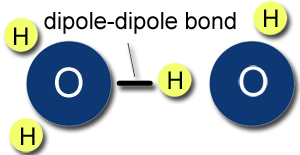
A specific example of dipole-dipole bonding is hydrogen bonding which is shown in the above diagram. Hydrogen bonds also exhibit characteristics of covalent bonds and are stronger than an average dipole-dipole bond (http://www.chemguide.co.uk/atoms/bonding/vdw.html). Hydrogen bonds are especially important in antibody-antigen bonding because water fills in the spaces between the antibody and antigen, linking molecules from both together using a chain of hydrogen bonds.
Atoms are called non-polar if they are non-polar on average. However, at any given moment, the molecule will usually be slightly polar in one area or another. This change in polarity causes the atoms around it to shift and become polar as well, which causes the atoms around them to shift and become polar, and so on. This creates an attraction.
Shape is the most important factor in antibody-antigen bonding. If the shape of the antibody is not complementary to the antigen, it is very difficult for the Van der Waals forces to work, because they only work in relatively close range.
Hydrophobicity helps to push antigens which have hydrophobic components into antigens (http://www.antibodyresource.com/antibody.html). They 'nestle' themselves inside antibodies. This helps keep the two close so that the Van der Waals forces can have a greater effect and helps to compensate somewhat (but not very much) if they shapes are slightly dissimilar.